Olive Oil Cake Recipe for a Golden Citrus Crumb
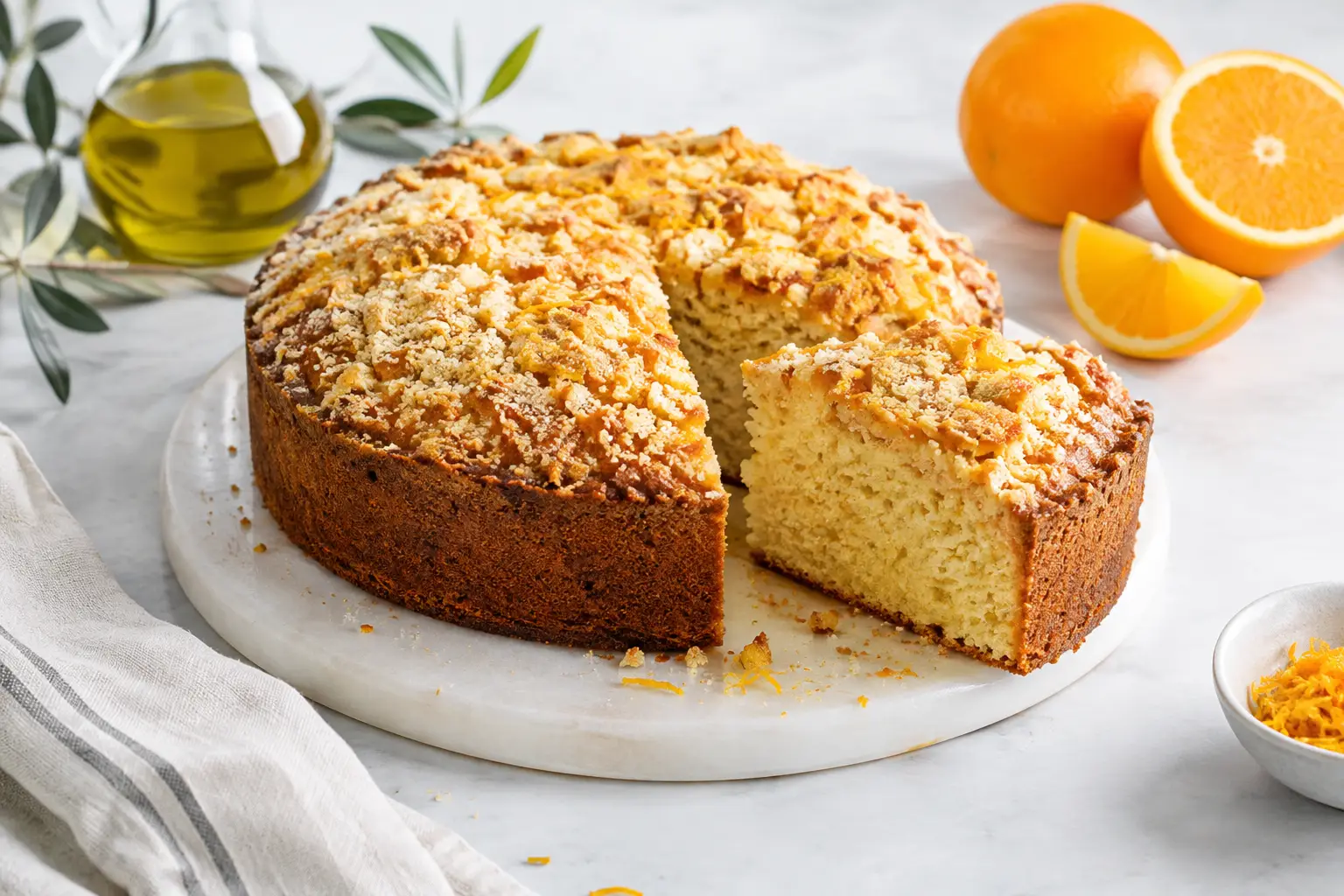
A good olive oil cake recipe begins not with a substitute, but with an ingredient worthy of the centre of the table. Here, extra virgin olive oil gives the crumb a supple texture and a gentle peppery warmth, while orange, lemon and honey recall the bright, sun-washed flavours of the Greek countryside. It is the sort of cake that feels at home beside afternoon tea, yet handsome enough to serve after a long lunch.
Unlike a butter cake, this one stays tender for several days. Its flavour also deepens overnight, as the citrus settles into the olive oil and the honeyed syrup finds its way through the crumb. Choose an oil you would happily taste from a spoon: fragrant, fresh and balanced rather than aggressively bitter.
Olive oil cake recipe with Greek citrus and honey
This recipe makes one 20 cm round cake, serving 8 to 10. A springform tin is ideal, though a deep loose-bottomed cake tin also works well. Bring the eggs and yoghurt to room temperature before beginning; this small detail helps create a finer, more even crumb.
Ingredients
- 180 ml high-quality extra virgin olive oil, plus a little for the tin
- 180 g caster sugar
- 3 large eggs
- Finely grated zest of 1 unwaxed orange and 1 unwaxed lemon
- 150 g thick Greek yoghurt
- 1 teaspoon vanilla extract
- 220 g plain flour
- 2 teaspoons baking powder
- 1/2 teaspoon fine sea salt
- 100 g ground almonds
- 60 ml fresh orange juice
- 2 tablespoons clear Greek honey
- 2 tablespoons chopped pistachios, optional
For the light citrus syrup, you will need 80 ml orange juice, 1 tablespoon lemon juice, 45 g caster sugar and 1 tablespoon honey.
Method
Heat the oven to 170C fan, or 190C conventional. Brush the tin with olive oil and line the base with baking parchment. A little oil around the sides encourages the cake to release cleanly and adds a faint golden edge.
Place the sugar and citrus zest in a large bowl. Rub them together with your fingertips for a minute, until the sugar feels damp and intensely perfumed. This releases the essential oils held in the zest, giving the finished cake far more character than simply stirring it in.
Whisk in the eggs, one at a time, until the mixture is pale and slightly thickened. Slowly pour in the olive oil while whisking, then fold through the yoghurt, vanilla, orange juice and honey. There is no need to overwork the mixture. The aim is a glossy, unified batter rather than great volume.
In a separate bowl, whisk together the flour, baking powder, salt and ground almonds. Fold the dry ingredients into the wet mixture in two additions, using a spatula. Stop as soon as no visible streaks of flour remain. Over-mixing makes any cake less delicate, but it is especially noticeable in an olive oil cake, where the desired texture is soft and open.
Scrape the batter into the prepared tin and level the surface. Bake for 40 to 48 minutes, until the top is deeply golden and a skewer inserted into the centre comes out clean or with a few moist crumbs. Ovens vary, so begin checking at 40 minutes. If the top is colouring too quickly, rest a loose sheet of foil over the tin for the final 10 minutes.
While the cake bakes, make the syrup. Put the orange juice, lemon juice, sugar and honey in a small saucepan. Warm gently, stirring until the sugar dissolves, then simmer for two minutes. You want a thin, bright syrup, not a sticky reduction.
When the cake comes from the oven, leave it in the tin for 10 minutes. Prick the surface all over with a skewer, then spoon two-thirds of the warm syrup slowly over the cake. Let it absorb before adding more. Leave to cool completely in the tin, then release it and brush the remaining syrup around the top and sides. Scatter with chopped pistachios if you like their colour and gentle crunch.
Why olive oil changes the cake
Butter brings richness, but extra virgin olive oil brings a different kind of luxury: fragrance. In a well-made oil, you may find green almond, cut grass, tomato leaf or artichoke notes, each of which can bring quiet complexity to a sweet bake. Citrus and honey are natural companions because they soften any peppery finish without concealing the oil's personality.
The choice of oil matters. A mild, ripe-fruit style produces a round, almost buttery result and is a safe choice for those new to baking with olive oil. A fresher, herbaceous oil makes a more distinctive cake, particularly lovely with lemon. Very bitter oils can be beautiful at the table but may dominate here, so taste first and use judgement. Fine ingredients should be expressive, not competitive.
Olive oil also keeps the cake moist. Butter firms as it cools, whereas oil remains fluid, so a slice kept beneath a cake dome will still be tender the next day. This makes the recipe particularly useful when you want to bake ahead for guests or send a thoughtful homemade gift.
Serving the cake well
Serve at room temperature rather than chilled, when the aroma of the oil and zest is at its fullest. A spoonful of thick Greek yoghurt alongside each slice gives welcome tang, while a few orange segments make it feel lighter after dinner. For a more celebratory finish, add lightly crushed pistachios and a final, restrained thread of honey just before serving.
Tea is the natural partner: a clean black tea, Earl Grey or a fragrant mountain herb infusion all work beautifully. After a leisurely meal, offer it with coffee and a small glass of something sweet. The cake is not overly sugary, so it can carry a richer accompaniment without becoming cloying.
At Ionian Heritage, we favour this style of baking because it allows a single-origin olive oil to be appreciated beyond the savoury table. A bottle with true provenance can turn an everyday cake into a small expression of place.
A few useful variations
For a sharper, more floral cake, replace the orange zest and juice with two lemons. Use a delicate oil for this version, and finish with toasted flaked almonds instead of pistachios. If blood oranges are in season, their juice gives the syrup a deeper hue and a faint berry-like note.
You can also make the cake dairy-free by using an unsweetened plant yoghurt with a thick consistency. The result will be slightly less tangy but still tender. Avoid thin, sweetened alternatives, as they can loosen the batter and alter the balance of sugar.
If you prefer a plainer cake for breakfast, omit the syrup and pistachios. The crumb will be less glossy but no less appealing, especially with a slice of ripe pear or a spoonful of yoghurt. Conversely, do not skip the syrup if you are serving it as a dessert: it gives the cake its glazed finish and keeps the citrus vivid.
Store the finished cake in an airtight tin at room temperature for up to three days. It is often at its best on the second day, when the flavours have had time to settle into one another. Cut a generous slice, pour the tea, and let a fine olive oil do what it has done for centuries: bring warmth, depth and generosity to the table.