A Guide to Tea Steeping Times for Better Cups
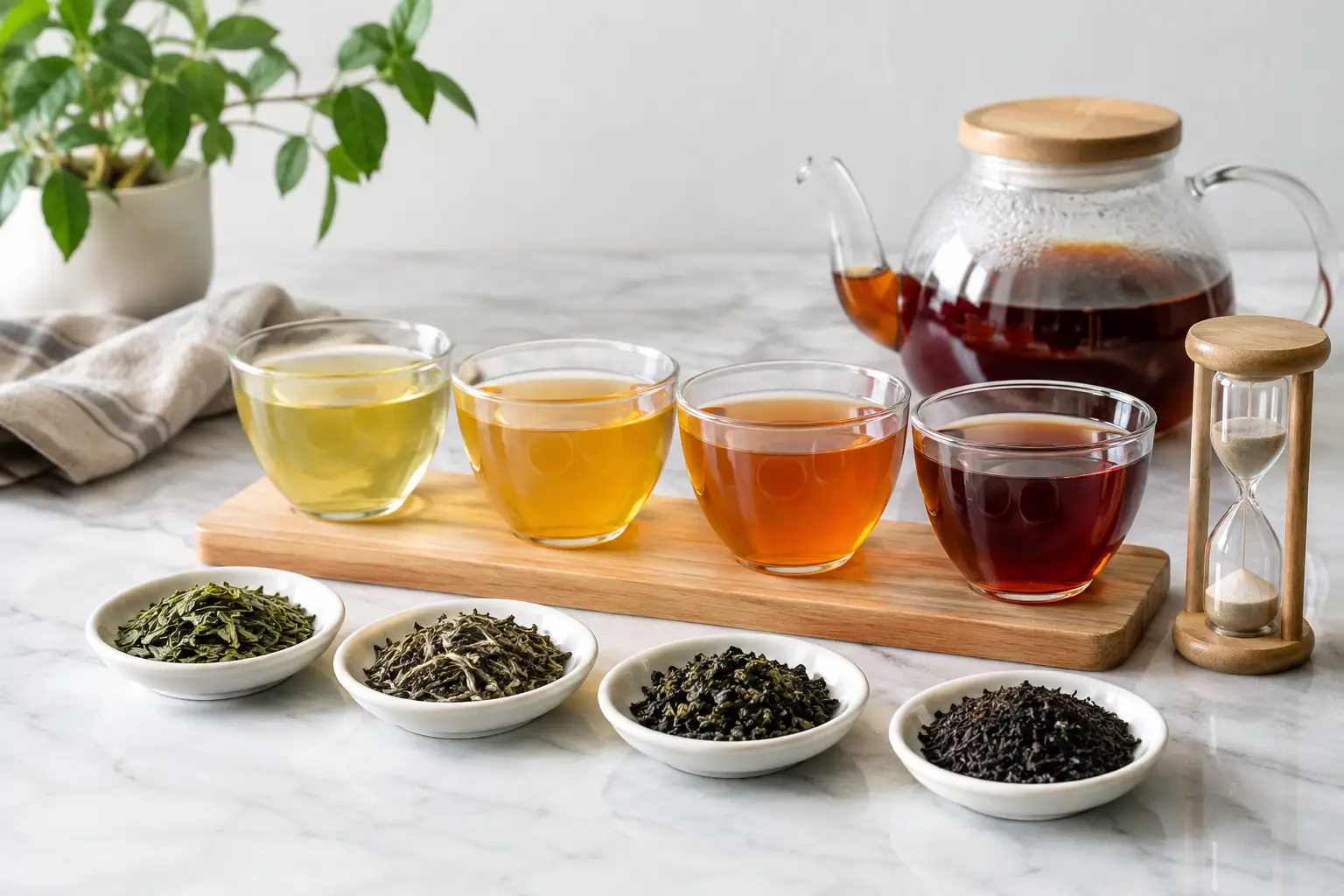
A beautiful loose-leaf tea can be diminished in a matter of minutes. Water that is too hot can roughen a delicate green tea; a black tea left unattended may become dry and tannic. This guide to tea steeping times is designed to make every cup more considered, whether you are pouring a brisk breakfast tea, a fragrant Greek mountain infusion or a quietly complex white tea.
Steeping is not simply a question of leaving leaves in water. It is the brief meeting of leaf, temperature, time and proportion. Get those elements in balance and tea reveals its perfume, texture and sense of place. Push one too far and its finer details disappear.
The guide to tea steeping times at a glance
For most loose-leaf teas, begin with one teaspoon per 250 ml cup, then adjust according to the size and density of the leaf. Large, airy leaves need more room in the spoon than tightly rolled teas. Use freshly drawn water where possible, and give the leaves space to unfurl in a pot, basket or infuser.
Black tea generally needs 3 to 5 minutes in water just off the boil, around 95-100°C. Green tea is usually best at 70-80°C for 1 to 3 minutes. White tea benefits from 80-85°C and 3 to 5 minutes, while oolong often shines at 85-95°C for 2 to 4 minutes. Herbal infusions, including Greek mountain tea, are more forgiving: use boiling water and steep for 5 to 8 minutes.
These are starting points rather than rules carved in stone. A fine whole-leaf tea may welcome a second infusion, often shorter than the first. A broken-leaf blend releases flavour more quickly and may need less time. Taste is the final authority.
Why time and temperature belong together
Tea leaves contain flavour compounds that dissolve at different rates. Aromatic oils and gentle sweetness tend to arrive early. With more time and hotter water, deeper body, bitterness and astringency follow. Neither is automatically undesirable. The welcome tannic grip of an Assam or Ceylon can be exactly right with breakfast, particularly if milk is part of the ritual. In a floral green tea, however, that same extraction can feel harsh.
Water temperature therefore changes the meaning of steeping time. Two minutes in boiling water is not interchangeable with two minutes at 75°C. If you do not have a temperature-controlled kettle, let boiled water rest in an uncovered kettle for several minutes before brewing green or white tea. For black tea and most herbs, pour while the water is freshly boiled.
The vessel matters too. A thick ceramic pot retains heat and continues extraction more energetically than a thin glass cup. When brewing a precious leaf, pre-warm the pot for black tea or keep the vessel at room temperature for a gentler green or white infusion. Small choices create a noticeably more poised cup.
Black tea: 3 to 5 minutes
Black tea has the structure to withstand near-boiling water. A 3-minute steep gives a bright, lively cup with lifted fragrance. At 4 or 5 minutes, the liquor grows fuller, darker and more assertive. This is often desirable for malty breakfast teas and bold spiced blends, but it can overwhelm more elegant single-origin leaves.
For a black tea served without milk, start at 3 minutes and taste. If it needs more depth, add 30 seconds rather than leaving it to brew unchecked. If serving with milk, a little extra strength is sensible, though the goal is richness rather than bitterness.
Green tea: 1 to 3 minutes
Green tea asks for restraint. Its fresh, vegetal and sometimes chestnut-like character is easily obscured by boiling water or long steeping. Use water at 70-80°C, then begin tasting after one minute. Delicate Japanese-style greens may be ready quickly; sturdier Chinese green teas may sit comfortably for two or three minutes.
If a green tea tastes grassy in an appealing, fresh way, it is likely well judged. If it tastes sharp, drying or medicinal, reduce either the temperature or the steeping time next time. Lowering both at once makes it harder to know what changed, so alter one variable with each brew.
White tea: 3 to 5 minutes
White tea can appear delicate, but its pale leaves often reward a patient infusion. Water around 80-85°C draws out honeyed, hay-like and soft floral notes without flattening them. A three-minute brew will be light and perfumed; five minutes can reveal a rounder, more lingering sweetness.
Whole-leaf white teas are especially well suited to repeated infusions. Rather than extracting everything at once, make two or three smaller cups. The first may be fragrant and airy, while later pours become fuller and more textured.
Oolong tea: 2 to 4 minutes
Oolong occupies a glorious middle ground between green and black tea, and its brewing depends on how heavily the leaves have been oxidised and roasted. Light, floral oolongs prefer slightly cooler water, around 85-90°C. Darker, roasted styles can take 95°C with ease.
A first infusion of two minutes is a refined place to begin. Rolled oolong leaves need time to open, so a second or third steep can be particularly expressive. Instead of extending every infusion dramatically, add roughly 20 to 30 seconds each time. This preserves definition and prevents the cup becoming heavy.
Herbal teas and Greek mountain tea: 5 to 8 minutes
Herbal teas are technically infusions rather than teas, as they do not come from the Camellia sinensis plant. Their steeping is nonetheless an art. Flowers, leaves, roots and berries release their character at different speeds, but most benefit from boiling water and a longer covered steep.
Greek mountain tea, traditionally gathered from highland Sideritis plants, becomes gently golden with notes that can seem citrusy, herbal and softly sweet. Steep it for five minutes for an elegant, light cup, or up to eight minutes for greater warmth and depth. Covering the cup or pot keeps its aromatic oils from escaping with the steam.
Chamomile follows a similar approach, though its apple-like floral character can turn slightly bitter if pushed too long. Peppermint is more resilient and can be steeped generously. With blends, trust the dominant ingredient: a tea containing robust roots or spices may need longer than one built around tender petals.
How to correct a cup that has gone wrong
An over-steeped tea cannot be fully reversed, but it need not be wasted. For black tea, a dash of milk can soften astringency. For herbal infusions, a little honey may round an overly forceful edge, though it will also change the tea’s natural profile. Diluting with hot water is the cleanest rescue when the brew is simply too concentrated.
Under-steeped tea is easier. Return the leaves to the water for 30 seconds to a minute, then taste again. If the cup remains thin, use slightly more leaf next time rather than steeping indefinitely. More leaf creates a richer infusion without necessarily introducing the bitterness that comes from excessive extraction.
Water quality deserves attention as well. Very hard water can mute fragrance and make tea seem chalky, while heavily chlorinated water distracts from refined leaves. Filtered water can bring greater clarity, particularly to green, white and lightly scented teas. For a pantry of rare, provenance-led ingredients, this quiet detail honours the producer as much as the final pour.
Make steeping a small ritual
A timer is useful, but it should not turn tea into a laboratory exercise. Set it for the lower end of the recommended range, then observe the leaves, colour and aroma. Taste before the timer ends if the fragrance suggests the tea is ready. Over time, you will recognise when a particular tea has reached its finest expression.
At Ionian Heritage, we believe that ingredients with a clear origin deserve a moment of attention. A carefully steeped cup carries more than flavour: it carries the season, landscape and patient craft behind the leaf or herb. Let the first brew teach you, and let the next one be even better.