A Guide to Honey Flavour Profiles Worth Knowing
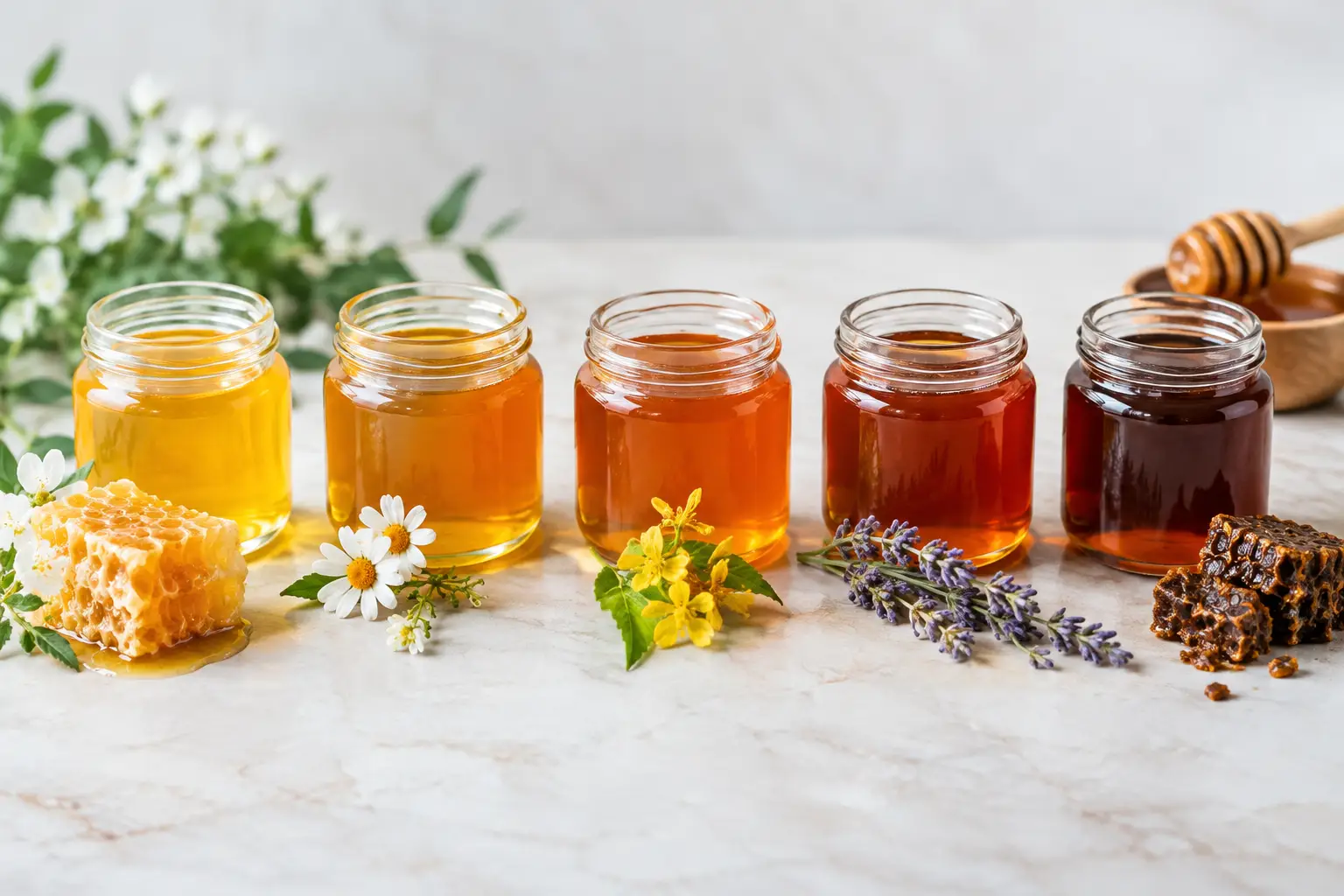
A jar of honey can carry the character of a hillside more vividly than almost any pantry ingredient. The flowers visited by bees, the dryness of the summer, nearby pine forests and the moment of harvest all leave their trace. This guide to honey flavour profiles is designed to help you recognise those differences, choose with confidence and use each variety as more than a sweetener.
For Greece, honey is a small but eloquent expression of place. From aromatic islands brushed by thyme to mountain forests rich in fir and pine, the country produces honeys with remarkable range. A pale, floral spoonful and a dark, resinous one may look like variations on the same theme, yet on the palate they can be worlds apart.
What creates a honey flavour profile?
Honey begins with nectar, or in some cases honeydew: the naturally occurring sugary substance gathered from trees by small sap-feeding insects. Bees transform these materials in the hive, but the dominant source remains the essential influence on flavour. This is why a thyme honey is recognisably herbal, while a pine honey has a deeper, woodier presence and usually less overt sweetness.
Botanical origin is only the first layer. Soil, altitude, weather and the density of surrounding plants all influence the final jar. A wildflower honey from one mountain region will not taste identical to one from another, even where many of the same plants grow. This is terroir in its most delicious form: a flavour shaped by a particular landscape rather than a formula.
Harvesting and handling matter too. Gentle extraction and careful storage preserve volatile aromas that can be lost through excessive heat. Colour offers a useful clue, but never a complete verdict. Darker honeys often suggest caramel, malt, dried fruit or resin, while lighter styles may lean floral, citrusy or buttery. Exceptions are plentiful, which is part of their charm.
A guide to honey flavour profiles from Greece
Thyme honey: aromatic, bright and herbaceous
Thyme honey is one of Greece’s most celebrated expressions, especially from dry island landscapes and sunlit coastal hills. Its perfume arrives first: wild herbs, warm hay and floral pollen, often followed by a clean sweetness with a lightly spicy finish. The exact profile changes by season and location, but good thyme honey has lift as well as depth.
This is a fine choice when honey needs to be noticed. Spoon it over thick Greek yoghurt with toasted walnuts, brush it onto grilled peaches, or serve it alongside aged goat’s cheese. It can also lend a fragrant edge to roast carrots or a vinaigrette, though a restrained hand is wise. Too much can overpower more delicate ingredients.
Wildflower honey: floral, rounded and expressive
Wildflower honey is not one fixed flavour. It is a seasonal portrait of the blossoms available to the bees, and its appeal lies precisely in that variation. It may bring notes of chamomile, orange blossom, meadow flowers, stone fruit or dried herbs, usually with a soft, rounded sweetness.
For an everyday table honey with genuine character, wildflower is exceptionally versatile. Use it in tea, drizzle it over fresh ricotta, or fold it into dressings and cakes where you want complexity without a forceful botanical note. Look for a producer who identifies the region and harvest rather than offering a vague blend. Provenance makes the difference between an anonymous sweetener and a honey with a story to tell.
Pine honey: mellow, woody and gently resinous
Pine honey is typically made from honeydew rather than flower nectar, giving it a profile unlike a classic blossom honey. It is often darker, less floral and less immediately sugary on the tongue. Expect forest notes, toasted nuts, malt and subtle resin, sometimes with a mineral quality that makes it particularly satisfying with savoury food.
Its depth suits a cheeseboard beautifully. Try it with pecorino, blue cheese or a firm sheep’s milk cheese, then add figs, walnuts and good bread. Pine honey also earns its place in marinades for pork or aubergine, and in breakfast bowls with oats, sesame and pear. If a recipe calls for honey merely to provide sweetness, a lighter floral variety may be preferable. Pine is best when its distinctive savour is allowed to contribute.
Fir honey: dark, complex and almost balsamic
Fir honey is among the most intriguing forest honeys. It can be deep amber to nearly black, with flavours that recall molasses, cocoa, roasted nuts and balsamic herbs. Some examples carry a faint smoky or liquorice-like note. Its texture is often dense and luxurious, inviting slow tasting rather than hurried stirring.
Pair fir honey with dark chocolate, tahini, rye toast or a mature hard cheese. It is particularly compelling in a simple dessert of strained yoghurt and sour cherries, where its dark character offsets fruit acidity. In baking, use it with restraint and reduce other strong flavours so its woodland complexity is not lost beneath spice or heavy cocoa.
Citrus and orange blossom honey: delicate, perfumed and fresh
In citrus-growing areas, bees can produce a pale honey with graceful floral perfume and a fresh, almost zesty finish. Orange blossom honey may suggest marmalade, white flowers and gentle fruit, rather than the sharp acidity of citrus itself. It is one of the most elegant styles for those who favour a lighter cup of tea or a subtle finish to a meal.
Serve it with mascarpone, soft cheeses or almond biscuits. It is also lovely stirred into a simple syrup for poached apricots, although heating will soften its most fleeting aromatic notes. Where its fragrance is the point, add it at the end.
How to taste honey properly
A thoughtful tasting need not be ceremonial. Set out two or three honeys at room temperature, with plain bread, water and neutral crackers. Taste the lightest honey first, then move towards darker or more resinous varieties. A small spoonful is enough.
Begin with the aroma. Does it smell of flowers, herbs, warm cereal, citrus peel, dried fruit or woodland? Then let the honey rest on the tongue before swallowing. Notice whether its sweetness is immediate or gradual, whether it feels silky, thick or slightly grainy, and what remains afterwards. The finish may be floral and clean, or it may linger with spice, malt and resin.
Avoid tasting directly after coffee, strongly seasoned food or mint. These flavours flatten nuance. If you are comparing jars, record a few words rather than trying to identify every note precisely. The goal is not to perform expertise. It is to learn what you enjoy and why.
Texture, crystallisation and what quality looks like
Crystallisation is natural. Honey is a supersaturated solution of sugars, and many varieties eventually form crystals. Some become smooth and creamy; others set more coarsely. This is not evidence of inferior quality or added sugar. In fact, minimally processed honey often crystallises readily.
The rate depends on the variety, temperature and natural balance of sugars. Thyme and blossom honeys may crystallise sooner than some honeydew varieties, while pine honey often remains fluid for longer. If you prefer it runny, stand the closed jar in warm, not boiling, water for a short time. High heat can mute the aroma that made the honey special in the first place.
When choosing honey, seek clarity of origin, a named floral or forest source where possible, and a producer prepared to stand behind the harvest. Words such as raw can be useful, but they do not replace traceability, careful beekeeping and good sensory quality. A premium honey should taste alive, not merely sweet.
Choosing the right honey for the occasion
For a breakfast table, wildflower or citrus honey offers easy versatility. For a gift, thyme honey has the recognisable allure of the Greek landscape, while fir honey feels rarer and more contemplative. For cheese and savoury cooking, pine and fir bring the greatest contrast to salt, fat and smoke.
The best choice also depends on the recipient. Someone who enjoys delicate tea and light pastries may find a strong forest honey too intense. A keen cook who loves olives, cheese and chargrilled vegetables may find it revelatory. A small collection of contrasting jars is often more memorable than one large, generic pot: it turns a familiar ingredient into a tasting of Greece itself.
Keep honey tightly sealed in a cool cupboard away from direct sunlight. There is no need to refrigerate it, and it rewards patience. Open a jar of thyme on a grey afternoon, or bring fir honey to the table beside good cheese and warm bread. In that quiet ritual, the landscape remains present long after the bees have left the flowers.