Greek Tea Review: Is Mountain Tea Worth Brewing?
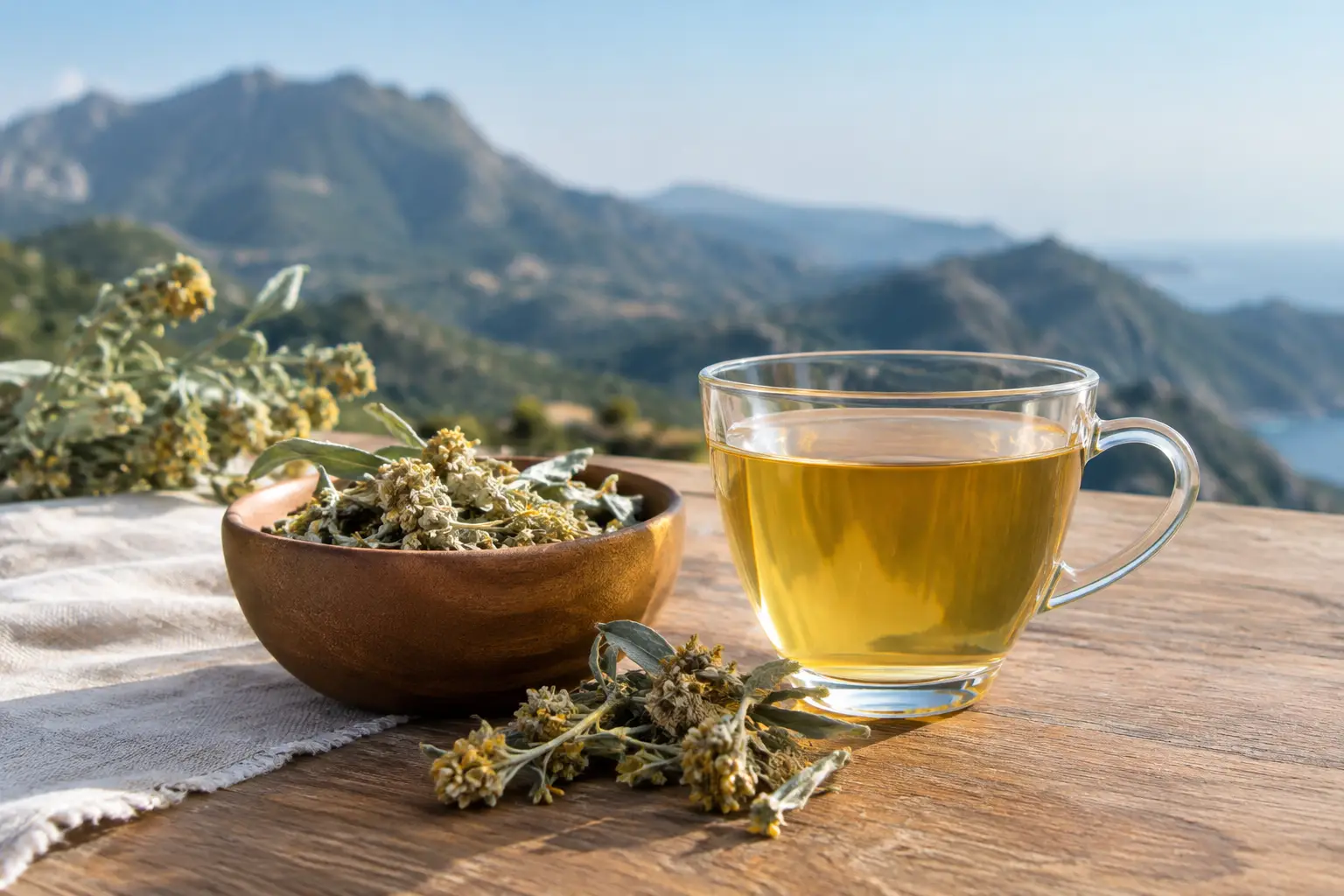
A proper Greek tea review must begin with a distinction that supermarket shelves often blur. Greek mountain tea is not black tea with a Mediterranean label. It is usually an herbal infusion made from Sideritis, a family of softly aromatic plants that grows on high, stony slopes across Greece. In the cup, it offers something quieter and more compelling: sun-warmed hay, wildflowers, gentle citrus and a faint, savoury earthiness that feels inseparable from the landscape.
For drinkers used to forceful breakfast blends, this can be a surprise. Mountain tea does not seek to dominate the palate. Its appeal lies in perfume, clarity and an unhurried finish. When the herbs are well grown, carefully dried and brewed with restraint, it is among the most graceful infusions in the Mediterranean pantry.
Greek Tea Review: What Does It Taste Like?
The best Greek mountain tea has a pale gold colour and a fragrance that arrives before the first sip. Expect notes of chamomile, dried meadow flowers, lemon peel and soft honey, often with a lightly resinous edge. Some harvests are sweeter and more floral; others carry a greener, mineral character. This variation is not a flaw. It is the signature of altitude, season, local soil and the particular Sideritis species in the bundle.
Its texture is another part of the pleasure. A fine mountain tea feels rounded rather than thin, even without milk or sugar. The finish is clean, with very little bitterness. That makes it especially welcome after a rich lunch, alongside a plate of biscuits, or later in the evening when conventional tea feels too stimulating.
Greek tea is also commonly used as a broad term for other native infusions, including chamomile, sage, dittany and blends scented with lemon verbena. These can be excellent, but they should not be confused with mountain tea. Chamomile is apple-like and soothing; sage is fuller, more herbaceous and slightly medicinal; dittany has a distinctive oregano-like warmth. A blend may be delicious, though its flavour tells a different story from pure Sideritis.
Why Provenance Changes the Cup
There is a practical reason to look beyond generic labels. Mountain tea thrives in exposed terrain, where the plants grow slowly under intense light and cool mountain air. Greece produces several prized regional forms, associated with areas such as Olympus, Pindus, Taygetus and Crete. Their names evoke ancient ranges, but the relevant question is more grounded: where was the plant grown, and how was it handled after harvest?
Whole flowering stems are usually a promising sign. They retain their delicate essential oils more effectively than fine-cut dust and make it easier to see what you are buying: silvery-green leaves, small yellow flowers and slender stems. A pale, faded packet with little aroma may still make a pleasant drink, but it is unlikely to offer the vivid scent and lingering sweetness associated with a careful harvest.
Small-scale cultivation and responsible wild gathering both have a place, provided the producer is transparent. Wild herbs have long been part of Greek household life, yet indiscriminate harvesting puts fragile mountain habitats under pressure. Cultivated mountain tea can be every bit as characterful, while offering greater consistency and a more considered relationship with the land. For a premium pantry, traceability matters as much as romance.
At Ionian Heritage, this is the lens through which Greek provisions earn their place: not simply as souvenirs of a holiday, but as expressions of a particular terrain and the people who work it. Tea becomes more meaningful when it carries that clarity of origin.
How to Brew Greek Mountain Tea Well
This is a forgiving infusion, but boiling it aggressively for too long flattens its floral character. Use fresh water just off the boil and allow a small handful of whole stems to steep in a covered pot or cup for around five to seven minutes. Covering the vessel is worthwhile, as it keeps the aromatic oils from escaping with the steam.
For one generous cup, two small stems or roughly a tablespoon of loose herb is a sensible starting point. Increase the quantity before increasing the brewing time if you want a fuller flavour. The second infusion can be rewarding too, particularly with generously flowered whole herbs, although it will be lighter and more meadow-like.
Honey is traditional, and a mild Greek honey can bring out the infusion’s soft botanical sweetness. Use it sparingly. Strongly flavoured chestnut or pine honey may overwhelm a delicate mountain tea, while a squeeze of lemon creates a brighter, more bracing cup. Neither is required. The unadorned version is often the most revealing when you are tasting a new harvest.
Cold brewing works well in warmer weather. Leave the herbs in cold water in the fridge for several hours, then strain and serve over ice with a strip of lemon zest. The result is gentler than a hot infusion cooled down, with an elegant grassy freshness that suits a long lunch or an afternoon in the garden.
What to Look for When Buying Greek Tea
The packaging should identify the herb rather than rely only on picturesque language. Look for Sideritis on pure mountain tea, ideally with a stated Greek region or producer. Whole, fragrant plant material is preferable to anonymous powder. The scent should be fresh, dry and floral, never musty or strangely sweetened.
It also helps to decide what sort of cup you want. Choose pure mountain tea when you value subtlety, caffeine-free drinking and a flavour that rewards attention. Choose a Greek herbal blend when you want a more pronounced profile, perhaps citrus-led for morning or chamomile-forward for the evening. Neither is inherently superior. A blend is a composed flavour, while single-herb mountain tea is a portrait of place.
Price can offer a clue, but not a complete verdict. High-altitude harvesting, careful drying and small batches cost more than bulk processing. Yet an extravagant price is not proof of quality if the origin is vague and the herbs are old. A trusted source, a clear harvest identity and a lively aroma are better measures.
The Health Question, With Some Perspective
Mountain tea has a long history in Greek homes as a warming herbal drink, especially during colder months. It contains naturally occurring plant compounds and is caffeine-free, which makes it a useful alternative for those reducing coffee or conventional tea later in the day.
That heritage should not be turned into extravagant promises. An infusion is not a medicine, and no thoughtful Greek tea review should present it as one. People who are pregnant, taking medication or managing a health condition should seek suitable professional advice before treating any herb as therapeutic. Its most dependable benefit is more modest and more enjoyable: a fragrant ritual that invites a pause.
Where Greek Tea Belongs at the Table
Mountain tea is remarkably versatile with food, although it is best paired with restraint. Its floral softness complements almond biscuits, sesame bars, honey cake and citrus pastries without competing with them. In savoury settings, serve it after a meal featuring roast vegetables, grilled fish or olive oil-rich dishes, where its clean finish acts almost like a palate-clearing breeze.
For gifting, it has an advantage over more familiar teas. A bundle of whole Greek mountain tea looks beautiful, stores easily and offers a genuine sense of place without requiring specialist equipment. Pair it with a small jar of honey and it becomes a generous, quietly luxurious gesture.
The finest Greek tea does not announce itself with noise. Brew it in a clear glass or white cup, take a moment to notice its wildflower perfume, and let the mountains speak in their own measured way.